What I Look for When I Meet a First-Time Founder
Most first-time founders are told that what matters most is the idea. I push back on that.
The idea matters, of course. But at the earliest stage, it’s rarely validated. It’s a hypothesis at best. Your first investors, your first clients, your first partners? They’re not betting on the idea. They’re betting on YOU.
Building is getting democratized at a pace none of us fully anticipated. New problems are emerging faster than ever, and with them, new founders. The barrier to starting has never been lower. Which means the question is no longer who has access to resources or tools; it’s who has what it takes to do something meaningful with them. Beyond the market opportunity and problem-solution fit, what investors and stakeholders are really trying to figure out is WHO is solving the problem.
After years of working with founders as both a mentor and a venture builder, here’s what I’ve learned to look for.
A couple of years ago, at a summit, someone caught me mid-coffee and asked if she could pitch her idea. I said yes (of course). She was building a genuinely creative solution — AgriTech aimed at small-to-medium size farmers, with real potential. Her energy was immediately obvious. But a few minutes in, I stopped her. I challenged the complexity of what she wanted to build and pushed her to go deeper and understand how her end users — the farmers — truly operated day-to-day. Not in theory, but on the ground. I remember how she looked taken aback. But she thanked me anyway and we went our separate ways.
About a year later, she connected with me on LinkedIn. Long message, demo video attached. She had completely revamped her product: kept the core technology, but rebuilt the experience around how her users actually lived and worked, creating much less adoption friction. She mentioned, almost in passing, that she had exceeded her Q1 user target by 200%.

That conversation stayed with me. She didn’t crumble when I challenged her. She didn’t abandon her conviction either. She’d done something rarer: absorbed it, sat with it, and came back sharper. That is, to me, what a first-time founder can look like at their best.
How they approach problems in real time
I’ve met many founders who can pitch well. What I find rare is someone whose thinking you can see working in real time when something catches them off guard. A question they haven’t considered, or a constraint they hadn’t accounted for.
What I’m watching for is whether someone can hold a problem at arm’s length and examine it honestly, stripping it back to what’s actually true rather than what’s assumed, then rebuilding from there. That instinct, when it’s present, tends to show up everywhere. Not just in how someone talks about their startup, but even in day-to-day conversations. And the good news is that it sharpens REALLY fast once you’re in the game.
How they handle being challenged
This one I’ve come to watch more carefully than almost anything else. Coachability is a word that gets used loosely, so let me be specific about what I mean.
I’m not looking for someone who agrees with everything I say. What I’m looking for is someone who can absorb new information, filter what’s useful from what isn’t, and be agile enough to update their thinking when the evidence calls for it. That ability is one of the most valuable things a founder can have.
It also tells me something beyond the mentor dynamic. How a founder handles being challenged is usually a preview of how they’ll operate with a co-founder who disagrees, a board member who pushes back, or a senior hire with a different perspective. The dynamic you see in that room tends to travel.
How they focus when everything is pulling at the same time
Some of the founders who have humbled me most are the ones I’ve worked with in markets where the ground shifts fast — where uncertainty isn’t a phase you push through, it’s the operating condition. What stood out in those founders wasn’t resilience in the motivational-poster sense. It was something more practical: their ability to quiet the noise, identify what would actually move the needle at this moment, and narrow their focus to exactly that.

This shows up in stable environments too. The founders who have it can tell you clearly what their top priority is this week and why, even mid-chaos. It’s a muscle. And like most muscles, it gets stronger the more you use it.
A note to whoever is reading this
Serial founders have an edge, yes. But it’s not only talent; it’s “mileage.” They’ve had the chance to stress-test these qualities across multiple cycles, to learn through experience when to hold a position and when to let it go. First-time founders are at the beginning of building that same mileage.
If you recognize yourself in any of this — not necessarily all three — it’s worth paying attention to. An idea can be refined. The market can be learned. The timing can be worked out. What grows the fastest, once you’re actually in it, is exactly the qualities I’ve described.
That’s the part I’m personally watching, and that’s the part I admire and respect the most.
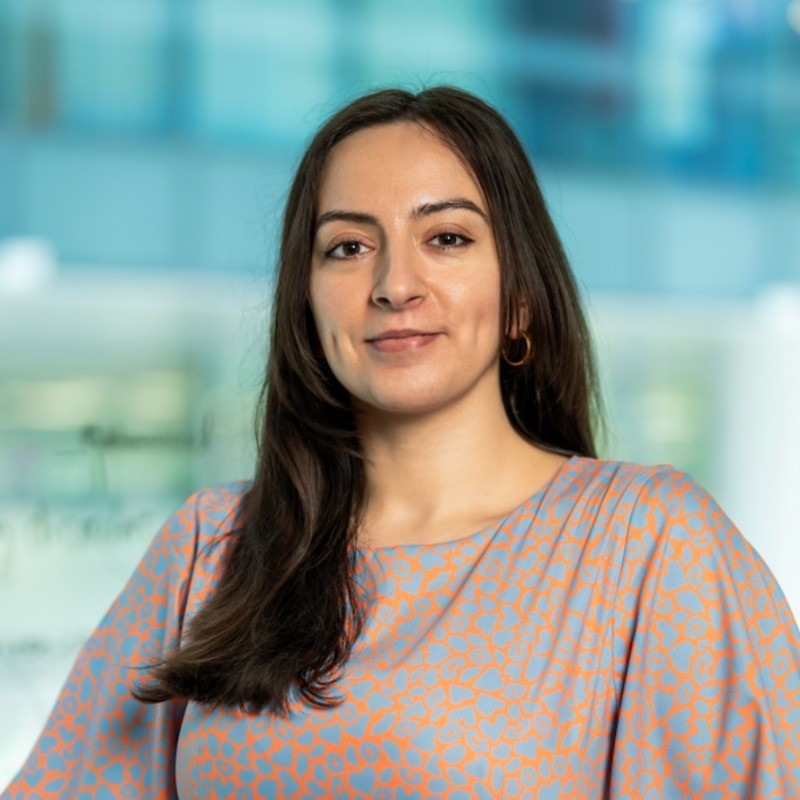
Mira Nouaihed is a venture builder and operator with over 10 years of experience building and scaling digital ventures across MENA. She leads ventures end-to-end, from zero to validation, with a track record spanning corporate venture studios, early-stage startups, and growth-stage companies. Mira works directly with founders in the FRWRDx IDEA Program.
Mira works with founders inside the FRWRDx IDEA Program. Rolling cohort applications are open