

A Moment of Doubt That Became a Turning Point
Updated: Apr 15
At the time, I was working in a corporate role, leading operations while improving customer experience and embedding sustainability into how the business functioned.
I remember the moment clearly because of how still everything felt when I read the message.
I was being asked to move something forward that, the more I looked at it, the less I could justify.
It wasn’t a grey area. It wasn’t a matter of interpretation. It was clear that what was being asked crossed a line I wasn’t willing to ignore. The kind of line that exists for a reason, especially when safety and responsibility are involved.
And yet, the expectation was to proceed.
What made it difficult wasn’t the decision itself. It was everything around it.
Because in corporate environments, you’re not really taught to stop at that point. You’re taught to move forward. To align. To deliver. To trust that decisions made above you are there for a reason.
That’s what I had built my career on.
I was someone who made things work. I knew how to take complexity and turn it into something that runs. I worked across operations, customer experience and sustainability, often sitting at the intersection of all three, making sure things didn’t just function, but felt right and were built responsibly.
And for a long time, that felt good.
Until it didn’t.
Because sitting with that message, I realized something I hadn’t fully allowed myself to see before.
That sometimes, in order to keep the system moving, you are expected to move with it, even when something is clearly not right.
Not because people intend harm. But because priorities shift. Commercial pressure, timelines, targets. And sometimes, lines that should never move begin to.
For me, those lines were not negotiable.
So I said no.
Not instantly. Not without thinking it through. But clearly.
And not long after, I was let go.
“The doubt wasn’t about the decision. That part felt grounded. It was about everything that came after.”
That was the moment the doubt really set in.
Not about the decision itself. That part felt grounded.
But about everything that came after.
Because when you step away from something stable without a defined next step, you’re left with a very practical question.
What now?
I had built a career I could continue in. I knew how to operate, how to deliver, how to create value within established systems. It would have been straightforward to find another role and step back into that world.
And for a moment, that’s what I considered.
But something had shifted.
Because once you’ve experienced a moment like that, it becomes difficult to ignore what it reveals.
I realized I didn’t just disagree with a single decision. I had outgrown the idea of operating in environments where, at some point, I might be asked to choose between doing my job and standing by what I believe is right.
That was the turning point.
Not the situation itself, but what it made clear.
Up until then, I had built everything within structures created by others. I had improved them, strengthened them, made them more thoughtful. But I had never seriously considered what it would look like to build something on my own terms.
That question stayed.
And it became difficult to ignore.
So, instead of looking for the next role, I made a different decision.
To build something of my own.
That was the beginning of Vogaya.

Not as a finished concept, but as a direction.
I knew what mattered to me. Sustainability. Animals. Materials. The idea that what you create should be aligned with what you believe in, not adjusted depending on convenience.
For the first time, I wasn’t contributing to someone else’s system.
I was defining one.
There is still uncertainty. There always is when you build something from scratch.
But there is clarity in something else.
That the values behind it are not conditional.
“Do you keep adjusting yourself to fit the system? Or do you build something that fits you?”
Looking back, that moment taught me something simple.
Doubt isn’t always about not knowing what to do. Sometimes it’s about recognizing that the environment you’re in no longer fits, and that staying would require you to compromise in ways you’re not willing to.
And from there, the question becomes simple.
Do you keep adjusting yourself to fit the system?
Or do you build something that fits you?
For me, that decision became Vogaya.
And that has made all the difference.
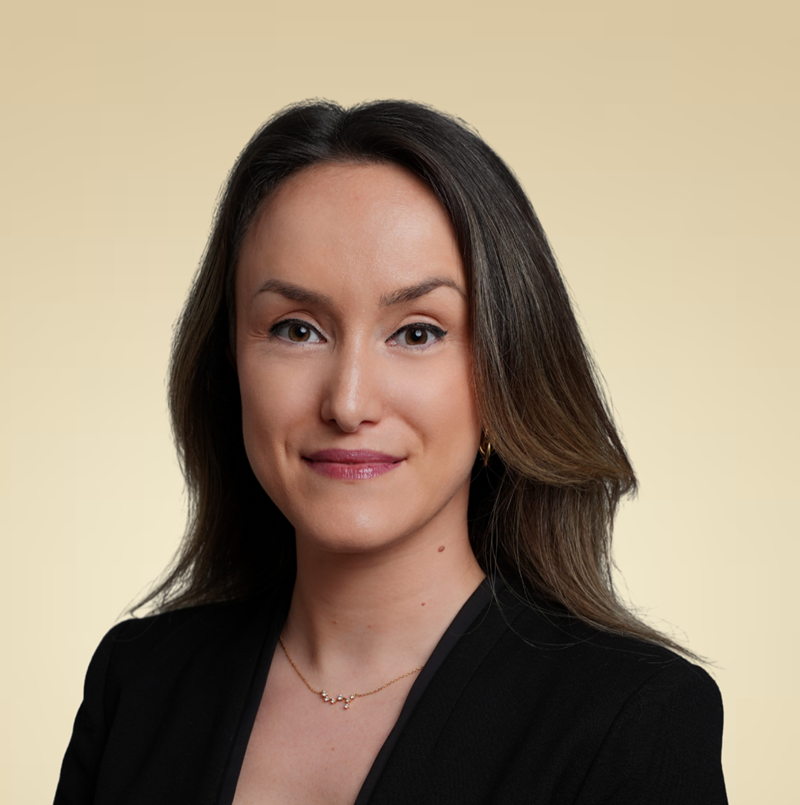
Elke Steijns is the founder of Vogaya, a plant-leather luxury handbag brand built for a kinder world. Elke is a founder in the FRWRDx IDEA Program.
If this resonates, rolling applications for the FRWRDx IDEA Program are open. The program is built for people at exactly this kind of crossroads — 14 weeks, 7 milestones, AED 3,000, zero equity.


