What Happened the First Time Someone Paid for My Product
The first time someone paid for Janvary, it was a day like any other. I had just gotten off a call with my customer and was working through the next item on my to-do list. And then, it happened.
It wasn’t a dramatic moment. There was no countdown, no celebration. A tiny notification alerted me that the bank transfer had come through. I looked at the confirmation, and almost immediately my mind skipped past the excitement.
My first thought wasn’t, “I’ve made it.”
It was, “This is real now. I have a responsibility to deliver.”
I had spent months thinking about what that first payment would feel like. I had imagined relief. Validation. Proof that someone believed in what I was building.
Those feelings were there, but only briefly. They were quickly replaced by something much heavier: the realization that someone had trusted a brand that barely existed outside my own conviction. They weren’t paying for an idea anymore. They were trusting me to create something worthy of becoming part of their story.

Janvary was built around a simple idea: to capture the magnificent beauty, powerful stories, and remarkable heritage that every culture carries in gold and diamonds, and make pieces that can be passed down for generations. Inspiration came from the city of Gold itself — Dubai, a melting pot of cultures. Our flagship collection is inspired by the Arab culture and a catalog featuring ethical, sustainable lab-grown diamonds. The first customer ordered one of our Arab culture-inspired gold rings after seeing a physical sample during an in-person meeting.
The Moment That Disproves Assumptions
Before that payment, I had thought the hardest part would be getting everything perfect.
I believed I needed a complete catalog. Editorial-quality photography. A polished store. Every detail carefully presented before anyone would take a new jewelry brand seriously.
Looking back, I had confused preparation with permission.
Pricing was another area where I wrestled with assumptions. Fine jewelry occupies an uncomfortable space for a new founder. Gold is expensive. Even with modest margins, the final price is a significant purchase.
I knew I couldn’t position Janvary as a luxury house charging luxury premiums. Trust is everything in jewelry, and I hadn’t earned decades of heritage. At the same time, pricing too low would send the wrong signal. If the jewelry represented craftsmanship, meaning, and precious materials, the price had to reflect that.
I wasn’t looking for bargain hunters. I was looking for people who connected with the story.
The woman who became Janvary’s first customer was of Arab origin, and the design immediately connected with her cultural identity. She did mention that the price felt slightly expensive.
Then she bought it anyway.
That surprised me. I had expected price to be the deciding factor. Instead, meaning was.
The payment didn’t tell me my pricing was wrong. It told me that the story behind the product had enough value to justify it. That was a very different lesson.
The transaction also challenged another assumption. Janvary operated on a made-to-order model from the beginning. Customers would choose from the catalog, production would begin only after the order was placed, and delivery would take around 10 to 15 business days.
I worried that people would hesitate because they couldn’t take the product home immediately.
Instead, seeing a finished sample in person created enough confidence for the customer to wait.
Trust wasn’t built by having hundreds of products available. It was built by creating one solid product well and standing behind it.

Interestingly, I didn’t change my pricing after that first sale.
Many founders react to their first customer by adjusting prices or redesigning their offering. I didn’t feel the need to. The payment confirmed that the balance I had been trying to strike — premium without pretending to be luxury — where it needed to be.
What changed after that first payment wasn’t the product. It was me.
The Beginning of Accountability
Before someone paid, I believed everything needed to be perfect before I could confidently put Janvary in front of people.
After someone paid, I realized that eyeballs on my product matters far more than perfection.
The responsibility to deliver became real faster than I expected, but so did the confidence that comes from seeing someone exchange money for something you created — not because your website is flawless or your catalog is complete, but because your work genuinely means something to another person.
That first payment wasn’t the end of validation. It was the beginning of accountability.
It also taught me something I’ll carry through every stage of building this business: products don’t exist in isolation. People buy stories they recognize, values they share, and craftsmanship they trust. The jewelry mattered, of course. But what the customer connected with was seeing part of her own culture reflected back to her in a thoughtful, beautifully made piece.
If you are waiting for your first paying customer, I want you to know this: keep showing up. Put your product in front of as many people as you can. Whether they buy today is secondary. Your job is to keep creating opportunities for the right customer to discover what you’ve built.
Eventually, someone will see themselves in your product.
And when they do, the payment won’t simply validate your idea. It will begin a much more honest conversation about your business, your customers, and the responsibility that comes with earning their trust.
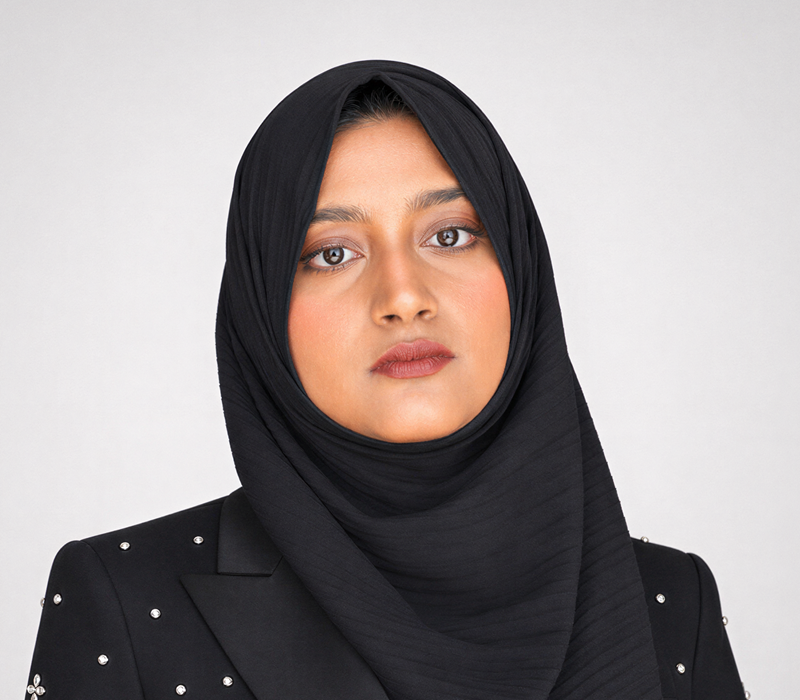
Mehthab M is the founder of Janvary, a fine jewelry brand creating culture-inspired gold and sustainable diamond jewelry. An architect turned designer, she captures the beauty of cultures from around the world through thoughtfully crafted pieces made the ethical and sustainable way. Mehthab is a FRWRDx IDEA Program alum.
If you are at the idea stage and want structured support to move from concept to your first real product, the FRWRDx IDEA Program gives you the framework, the mentorship, and the milestone structure to do it. 14 weeks, 7 milestones, AED 3,000, zero equity.