

Why I Spent Weeks on My Company’s Vision Before I Built Anything
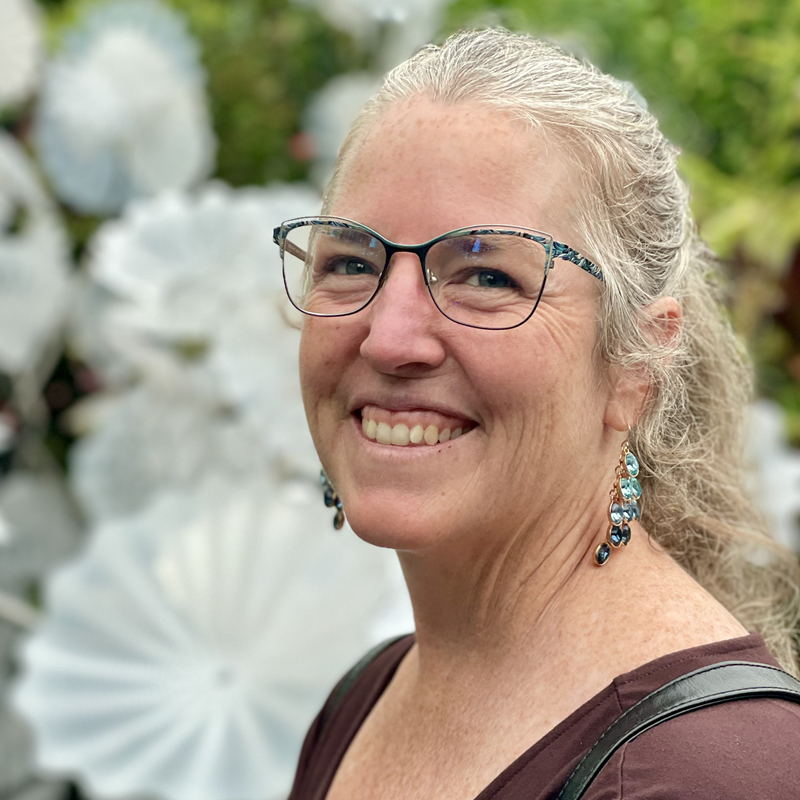
I am a doer. When I get an idea, my instinct is to jump in head first and figure it out as I go. My creative energy flows quickly and I love riding in the current of planning and building. It is intoxicating. Which is exactly what I did when I first had the idea for The Selah Journey — and it cost me two years.
Two years of falling short of my goals. Inconsistent results. Continual reinvention. And the whole time, everyone around me was asking me the same question: why? Why is this the thing you’re giving your life to? So what was mine?
I thought I already knew. I had walked through my own exhaustion and burnout and come out the other side. I wanted to help other women do the same. That felt like a why. But when I entered the FRWRDx program, mentors pressed me: “But why?” “Okay, but why?” “Keep going.” I had no satisfying answer. My client was my why, I kept saying. None of them bought it.

I needed to step back and do my homework properly.
Two Exercises That Broke Everything Open
I started with the problem — women neglect their own self-care — and began drilling past the surface. The Five Whys. Why? I recognized the technique. It’s the same thing I do with coaching clients, just turned on myself. When someone gives me an answer, I ask: so what? Keep going. Why do women neglect self-care? I had breezed through this exercise early in the program without understanding the point. My first attempt just scratched the surface, reflecting a fragmented wellness industry. Returning to the problem and digging deeper with The Five Whys broke something open and revealed an answer I wasn’t ready to say out loud.
Additionally, Simon Sinek’s Golden Circle exposed me. I could describe Selah and Hala. I could map the pathway. What I couldn’t do was answer the one question at the center. My why had no weight yet.
I remember getting to the bottom of the Five Whys and having a gut-punch moment. I had broken through a wall and uncovered a hidden world.
My true root cause revealed: women neglect self-care because they are overwhelmed, invisible, and depleted. They carry the burden of maintaining relationships, culture, and family systems. It is a labor that is simultaneously essential and devalued. This keeps us from thriving in our full humanity.
This reality exists because our world has been built by men to accommodate their purposes and strengths. Women are told to find a way to thrive inside a system that was not built for them and does not consider their lived experiences as primary. That is not just difficult. It is unjust.
At the beginning, this work felt important because I had neglected my own self-care and completely fell apart. I wanted my failure to become a pathway to more for others. The Five Whys opened up something much bigger. This wasn’t just something I wanted. It was an imperative.
When I started saying it out loud to women in my world, the response stopped me in my tracks. I heard a resounding Yes! It was as if I was naming something they already felt but didn’t have language for. Confirmation: this was real.
Clarity Changed My Business
Immediately, I stopped building a coaching practice and started building a community ecosystem. The injustice my why uncovered was too big for a one-on-one model. A woman sitting with a coach once a week cannot change the conditions she returns to. She needed a community built by women, for women.

Next, I got specific about who I was building for. Although my why could apply to every woman on earth, the woman I could powerfully reach was someone who could recognize herself in my experience: a high-achieving professional who appears composed while quietly exhausted; a woman who has given everything to everyone else and lost herself in the process. When I saw her clearly, I could build for her specifically.
Finally, I stopped borrowing from inadequate frameworks and built a new one. The Five Whys forced me to explore better questions, which led me to understand not just how women needed support — our Selah and Hala framework — but also what was actually holding them back: the internal barriers they have built up that sabotage them from the life of thriving they deserve.
The Why Is the Foundation
The word Selah itself is a request to pause, consider what you’ve taken in, and respond with clarity. I wrote a whole book about that practice. And still, I had to relearn it. When I was chasing an idea, nothing held. When I did the homework on my why, everything fell into place. The why is the enduring part.
Simon Sinek writes in “Start With Why” (2009): “People don’t buy what you do; they buy why you do it.” That is so true. People don’t invest in a program. They invest in a vision, in the world you are creating. That trust is built on your why, not your offer.
You are being asked right now to do work that most founders skip. Don’t. Go back to your first answer. Ask why again. Keep asking until the answer makes you uncomfortable. Build from there.
The why doesn’t change. It’s the foundation, the vision. I needed that vision to succeed. So do you.
Cami Foerster is the founder of The Hala Journey (UAE) and The Selah Journey (US). Cami is a Cohort 2 alum of the FRWRDx IDEA Program.
The FRWRDx IDEA Program is built around the work most founders skip. Seven milestones, 14 weeks, AED 3,000 — and you keep 100% of your company. Rolling applications are open.


