

How I Used My Competitors’ Weaknesses to Define What Made My Idea Different
There is a line in the first investor deck I ever made for Arabeasy. It says: “First-mover advantage — no other competitors blending gaming and culture at this scale.” I was proud of that line. It was also the least useful sentence in the entire document.
When I wrote it, I had done what most founders do when they “look at the competition.” I looked at what existed, I noticed it wasn’t quite what I was building, and I concluded that I was first. That isn’t research. It’s a confidence exercise wearing the costume of one. I had used my competitors to feel good about Arabeasy, not to learn a single thing about it.
The version that mattered came later, and it started from a worse feeling. Not “No one is doing this,” but “Why has no one who tried this gotten it right?”
So I went back and actually looked. Arabeasy makes games rooted in Arab heritage — our first is a camel racing game — for a global audience. The landscape around that idea is not empty. I built a table and filled it with everyone standing anywhere near what we wanted to do.
The global publishers — Ubisoft and others — were doing Arabic localization, putting real money into translating and dubbing AAA titles into Arabic. There were the edutainment players: VR studios like Mure VR, building curriculum-aligned cultural experiences for schools and museums. There were language-first products like Babil Games, teaching Arabic to children through play. And regional studios were layering Middle Eastern themes onto familiar mobile formats.
None of them was lazy. Some of them were very well made. That was the part that unsettled me. If the talent and the money were both there, why did none of it feel like the thing I knew was missing?
Three patterns kept repeating.

The first: culture was treated as a translation layer. The assumption baked into Arabic localization is that serving the Arab player means changing the language. But a French game in Arabic is still a French game. Translating the words is not the same as the world belonging to you.
The second: culture was treated as a lesson. The edutainment products framed heritage as something to be taught — worthy, curriculum-shaped, good for you. Which quietly tells a child that their own culture is homework, not entertainment. No kid chooses the educational thing, or can even relate to the world we lived in before the internet.
The third: culture was treated as a skin. A familiar mobile format with a desert palette dropped on top. The mechanics could have come from anywhere, and the heritage was set dressing you could peel off without changing the game underneath.
Under all three was a single assumption I couldn’t unsee once I’d seen it. Everyone treated Arab culture as a constraint to be served — regionally, carefully, for “our” audience — and no one treated it as intellectual property that could be globally entertaining on its own merits. Culture was the thing you accommodated. It was never the thing you led with.
What I Built From Each Gap
That assumption became my brief. Every weakness is mapped to a decision.
Because culture-as-translation was the trap, I refused to build a generic game and paint it. The heritage had to be the IP itself — the hero camels, the thirteen real GCC city tracks, the world. Take the culture out, and there is no game left.
Because culture-as-lesson was the trap, I built fun first. Skill-based rhythm racing, ranked play, cosmetic-only, no pay-to-win. Thirty seconds to learn, years to master. The culture rides inside the fun; it is never the reason you’re told to show up.
And because everyone was built for “the region,” I built for a global generation and let the market settle the argument. We launched on Roblox first — the cheapest, honest test I could run. In four months, we crossed 600,000 players with zero ad spend, a 95% rating, and average sessions far above the mobile-racing benchmark. The detail that ended the debate in my own head: our top markets were the United States, Indonesia, and Russia — not only the GCC. Arab heritage didn’t need to be protected as a niche. It traveled.
I want to be honest about where this sits. The independent mobile version fundraising goal is still ahead of us, and I don’t yet know how the full bet pays off. What I do know is that the analysis changed the company — because I finally stopped asking the comfortable question.
So here is the one thing I’d tell you before you open your own competitive landscape. Don’t go hunting for the feature your competitors are missing. Features are easy to copy and easy to add. Go hunting for the assumption they all share — the belief about their market that everyone of them has quietly stopped questioning. That shared assumption is where the real gap lives, because if everyone believes it, no one has built for the world where it’s wrong. Find the thing they all take for granted.
Then, ask what you would build if it weren’t true.
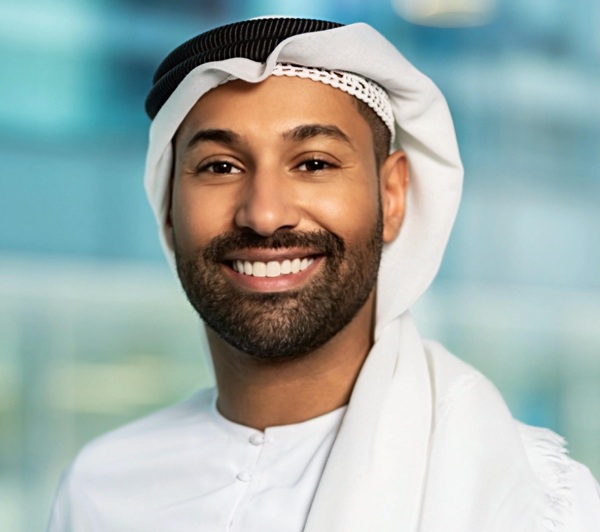
Saeed Almheiri is the co-founder and CEO of Arabeasy, a gaming studio building Arab-heritage IP for global audiences. He built Arabeasy through the FRWRDx IDEA Program and is a Cohort 2 alum.
If this approach to competitive ideation resonates, the FRWRDx IDEA Program includes a structured milestone for exactly this kind of analysis. Rolling applications are open. 14 weeks, 7 milestones, AED 3,000 — and you keep your company.


