

A Great Pitch Deck Cannot Lead the Room
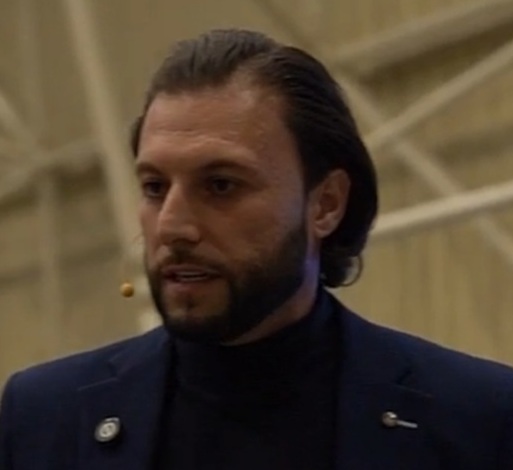
Maher Elusini explains why successful investor pitches depend on leadership communication, executive presence, mindset, adaptability, and Q&A discipline.
I was sitting at a pitch competition when a founder walked onstage with an idea that had potential.
She was solving a real problem in the legal space, connected to rental disputes and access to legal support in the UAE. The slides were strong. The concept was clear. On paper, there was something there.
She took the microphone with both hands, stood to the left of the stage, and began with a strong voice.
But seconds later, she started to stutter.
The moment that happened, she turned her right shoulder towards the audience, looked at the screen, hoping the slides would bail her out. They could not. You could hear the tremble in her voice. She became demoralized, started speaking faster, and tried to recover by saying more.
The audience did not attack her. That is not how rooms usually reject you. People remain polite. They sit there. They look at you.
But internally, they check out.
And once they checked out, the investor pitch was finished.
I have personally delivered more than 500 presentations, workshops, and keynote speeches in high-stakes leadership environments over the last decade. I have also watched at least 100 founder pitches and business presentations with my own eyes. One pattern keeps showing up: a founder can have a strong idea or deck without having the leadership communication or executive presence required to bring it to life.

There is a difference.
The Identity Gap
We are living in a time when brilliant ideas are being created faster than ever. Human intelligence is cross-pollinating with artificial intelligence. A founder can use AI to research a market, sharpen a business model, and build an impressive investor pitch deck in days.
But that speed creates an identity gap.
The company presented on the slides may look sophisticated, decisive, and ready to scale. The founder standing beside those slides may not yet have developed the leadership communication and executive presence required to embody that company.
That is the real gap.
And it’s costing founders and leaders millions.
A pitch is not merely an exchange of information. It is a leadership moment. You are asking people to believe in a future that does not yet exist, place liquid capital behind it, and trust you to make it real.
Your job is not simply to explain the idea.
Your job is to inspire action.
Your presentation breathes life into the idea. It gives the idea a soul.
This is one reason I created The MAHER System™. It is a five-pillar leadership communication framework built around a simple principle: transformation moves from the inside out. Your mindset shapes your executive presence. Your presence affects your audience connection. Your connection determines whether your message lands and whether people move.
Conviction Without Desperation
The founder who leads the room is grounded, prepared, and present.
They are not walking into an investor meeting thinking, “I hope they approve of me.”
They are walking in knowing, “I have done the work. This matters. If we are aligned, we can build something valuable together.”
That is not arrogance. It is conviction without desperation.
A pitch is not merely an exchange of information. It is a leadership moment.
The weaker founder becomes reactive. Reactive to a raised eyebrow. Reactive to someone checking their phone. Reactive to the knowledge that money is on the line.
They begin fantasizing about what everyone in the room must be thinking, then perform according to a story they invented in their own mind.
Fear, in that moment, becomes fantasized experiences appearing real.
The best founders still feel the pressure. The difference is that their mind is set on delivering, not escaping. They have prepared from multiple angles, challenged their assumptions, and rehearsed the presentation without memorizing it word for word.
That distinction matters.
When you memorize every sentence, one forgotten line can collapse the entire structure. When you understand your message, you can adapt. You can pause. You can answer a question. You can follow the investor conversation somewhere the deck did not anticipate.
That is leadership communication under pressure.
Navigate the Q&A
The Q&A reveals this faster than almost anything else.
An investor asks a difficult question, and the founder thinks they must produce an immediate, impressive answer. So they bluff, ramble, or bury the uncertainty under jargon.
Do not do that.
Sometimes the most credible answer is: “That is a phenomenal question. I do not know the answer yet. Give me 24 hours, and I will find it and come back to you.”
You have not lost authority by admitting that you do not know.
Say a few things well, not many things poorly.
You lose authority when the room can see that you do not know, but you continue pretending.
The same applies to overexplaining. Founders often keep talking because silence feels dangerous. Psychologically, they are communicating, “I need to impress you so I do not lose this investment.”
But executive presence is rarely found in the longest answer.
Say a few things well, not many things poorly.
Answer the question. Stop. Let the investor think.
Prepare the Right Way
Reading the room does not mean changing your identity every time you enter a different culture. Respect is universal, although its expression has cultural nuance.
In Saudi Arabia, opening with “Assalamu alaikum” may communicate awareness and respect. In Japan, understanding the conventions around greeting and formality matters.
Do your homework.
But do not manufacture a personality you believe investors want. That creates more cognitive dissonance, not more credibility.
The room does not need a performance of a CEO. It needs evidence that you can become, and remain, the leader the business will require when conditions become difficult.
So before you enter the room, take a breath.
Not because breathing is sophisticated advice, but because most people hear it and still fail to do it. Change your physiology, and you begin to change your psychology.
Remind yourself that you have done the work. You do not need to prove your worth. You need to present the opportunity, lead the conversation, and remain responsive to what happens next.
Do not attach yourself to controlling the outcome. Attach yourself to the quality of your preparation and the standard of your delivery.
Then walk into the room with one final thought:
“I will give everything I can, and I will live with the result.”
Maher Elusini is an international leadership award-winning keynote speaker, executive coach, author, and creator of The MAHER System™, his five-pillar framework for leadership communication and executive presence, featured in SUCCESS® Magazine. Over more than a decade, he has personally delivered more than 500 presentations and keynotes, working with founders, senior executives, government leaders, and organizations including Cartier, Hub71, ROSHN Group, Abu Dhabi Department of Economy, and the Government of Canada. He is the author of Million Dollar Speaker and helps leaders communicate with authority, inspire action, win investment, and lead more powerfully when the stakes are highest. Maher is a FRWRDx mentor.
Milestone 7 of the FRWRDx IDEA Program is where founders build the pitch and practice the delivery — because the deck is only half of what the room requires. The other half is you.


