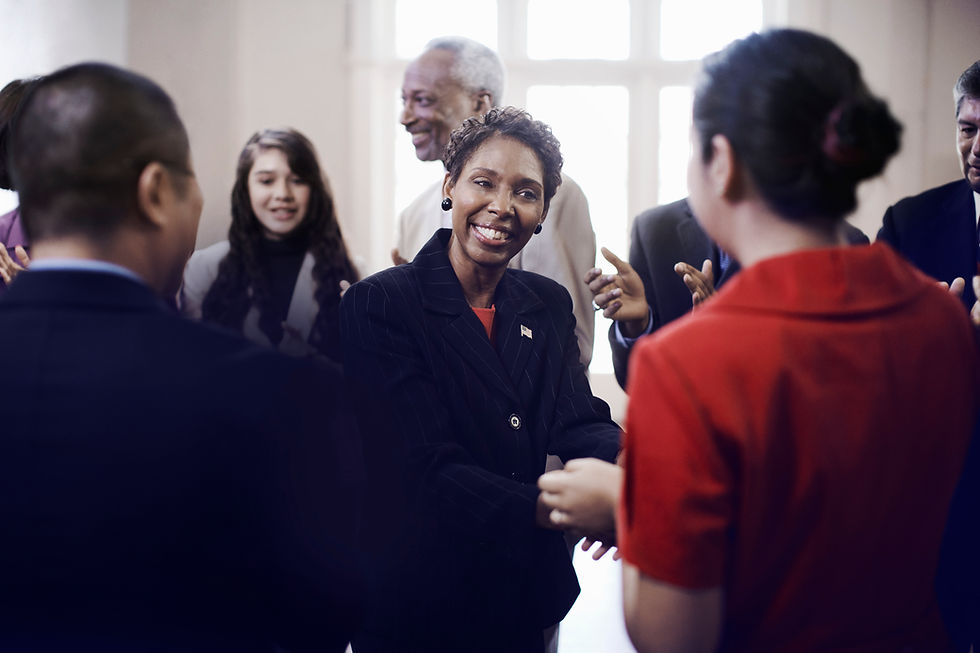
How to Be a Better Networker Before You Even Arrive

Updated: Apr 1
You’ve probably heard the idea that just six degrees of separation connect you to anyone on the planet. In the UAE, many joke that it’s more like three.
In somewhere so interconnected, it’s remarkable how closely our personal and professional worlds overlap. Click on almost any LinkedIn profile here and you’ll likely find a handful of mutual contacts — sometimes even someone you’ve worked with previously.
And when we tap into these social threads intentionally, especially as an entrepreneur, our businesses can accelerate in ways we never expected. That’s the real power of networking.
But with the sheer volume of events in this region, standing out has become harder than ever. Simply showing up is no longer enough. Presence isn’t the differentiator anymore. Positioning is.
After dozens of introductions in a single evening, names and roles blur. People rarely remember who they met; they remember how one or two individuals made them feel.
What cuts through the noise is giving the brain something to hold onto; a distinctive perspective, a moment of value, or a clear sense of relevance. Without that anchor, even the best conversation evaporates after the next handshake.
This becomes even more important during peak networking periods like during the Holy Month of Ramadan, when people are attending Iftar and Suhour events and have more hours to mingle in a relaxed setting. Many lifelong connections have been made during this special period.

Getting Seen Before You Get Seen
The trouble is that many founders underestimate how much pre-event visibility shapes in-person conversations.
They assume networking begins when they walk into the room, treating content as optional rather than strategic. But attention is allocated long before anyone arrives.
We live in an algorithm-led world where attendees subconsciously form judgements about who seems credible or interesting based on what they’ve already seen online. By the time an event starts, most people have an internal shortlist of who they want to meet — and if you’re invisible, you’re not on it.
When someone has already encountered your thinking, your work, or even just your face online, you’re no longer starting from zero.
A 2025 study in BMC Psychology found that frequent exposure to someone’s social media content significantly shapes impressions and strengthens positive associations. It’s essentially a modern reflection of the mere-exposure effect.
Pre-event visibility removes the friction of a cold introduction. Instead of “What do you do?”, conversations start at “I saw your post about X,” which immediately deepens the exchange.
Avoiding the Most Common Pre-Event Mistakes
Despite this, many people still approach networking in ways that limit their impact. One major mistake is treating it as a single moment rather than a relationship funnel.
Someone might collect business cards or exchange social media handles but never deepen the connection where trust is truly built, through consistent visibility on platforms like LinkedIn or Instagram. Without that longer arc of exposure, people stay stuck at basic awareness, never progressing to interest, trust, or collaboration.
Another issue is the mismatch between a person’s online brand and their offline presence. Continuity really matters.
When your digital persona feels polished and articulate but your in-person energy or communication style feels different, it creates friction, and friction kills referrals. This is why I often recalibrate clients’ visuals when their imagery or mood boards don’t genuinely reflect who they are. Alignment isn’t vanity; it’s strategy.
And then there’s follow-up.
It’s tempting to default to generic, forgettable messages. However, a polite “Lovely to meet you” doesn’t build a relationship. What does is intention. Try referencing something specific you discussed, suggesting a coffee, or proposing a collaboration that feels relevant.
Networking has never been about how many people you meet; it’s about how many relationships you continue.
Investing in You
You wouldn’t think twice about investing in flights, leisure opportunities, or travel for example. Yet establishing a strong personal brand that supports your networking efforts really creates impact and makes it worth taking time away from your business. People may genuinely enjoy meeting you, but enjoyment doesn’t automatically translate into opportunity.
A strong personal brand helps people position you clearly in their mental map, which is essential for referrals, collaborations, and long-term visibility. Opportunities often come not from the person you spoke to, but from the person they mention you to later.
As Jeff Bezos famously said, “Your brand is what people say about you when you’re not in the room.” Nowhere is that truer than in networking.
Here are my five suggestions for building a memorable personal brand:
Craft a clear, compelling introduction that answers, “Why should this person care?”
Build a visual identity — photography, colors, wardrobe, body language — that reinforces your message.
Use content strategically before an event to show your thinking and expertise.
Share value-led insights online during the event, not just photos.
Follow up with thoughtful, relationship building content that invites next steps.
Then the deeper connections will take care of themselves.
Candace Braganza is the Founder of Scuplt25 Creative.